Product
 Brand
Brand Articles
 Tools
Tools
LPDDR5 Memory 2026: Lead Times, HBM Impact, and Procurement Strategies
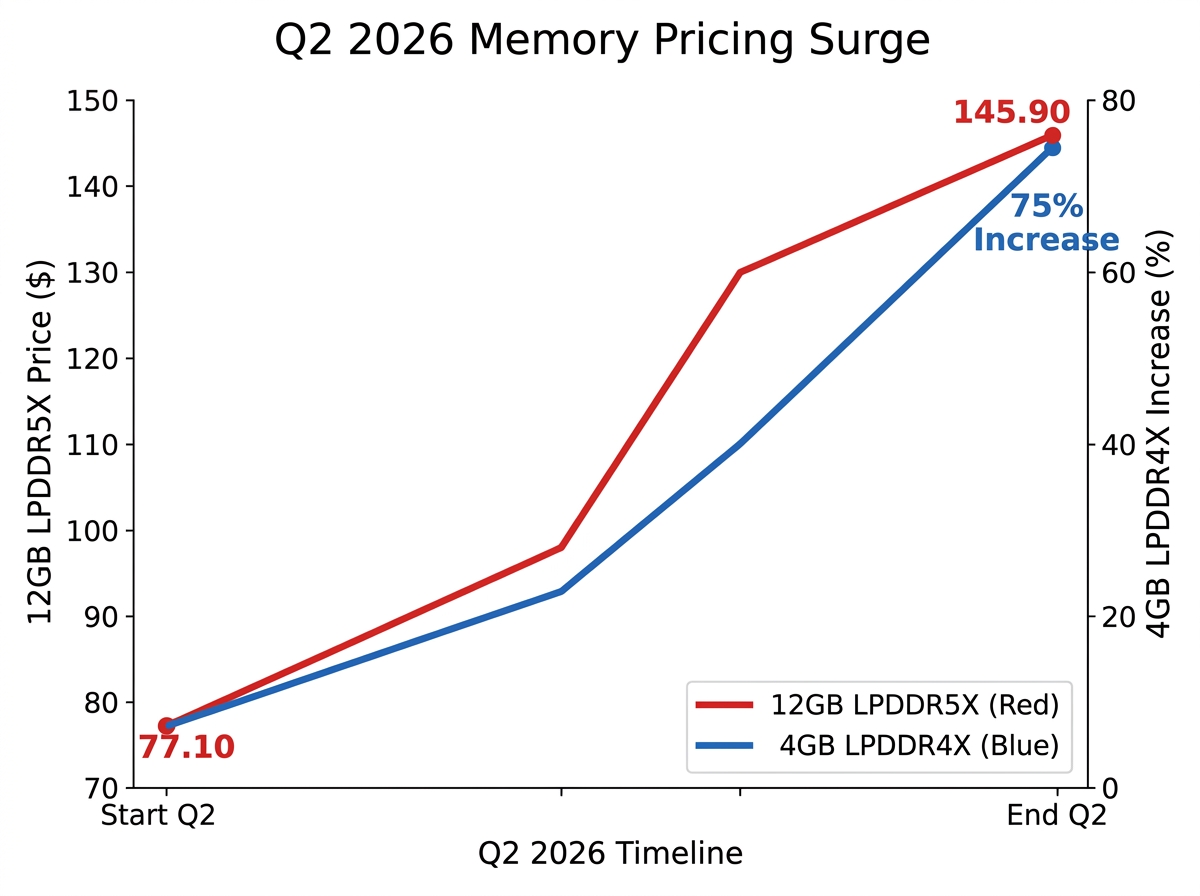
In Q2 2026, contract prices for 12GB LPDDR5X modules surged 89% quarter-over-quarter, jumping from $77.10 to $145.90, while lead times for advanced memory components stretched to 40–58 weeks[1][2]. This is not a pandemic-era logistics glitch. The 2026 memory crisis is a deliberate, structural reallocation of global fab capacity toward High-Bandwidth Memory (HBM) for AI infrastructure. Electronics engineers and procurement teams who rely on LPDDR5 for edge AI, automotive, and industrial designs now face a supply environment that defies traditional purchasing playbooks.
This intelligence brief breaks down the 2026 DRAM and NAND flash price forecasts, explains the physical wafer penalty driving the shortage, and outlines actionable procurement strategies—from buffer stocks to part number cross-referencing—to protect your production lines from line-down events.
The State of the 2026 Memory Super Cycle
DRAM Memory Trends 2026: Price and Lead Time Forecasts
According to TrendForce and Sigmaintell reports from June 2026, the memory super cycle has entered a new phase of severity. Beyond the 89% surge in LPDDR5X pricing, LPDDR4X (4GB) modules also increased by 75% in the same quarter[1]. These are not isolated spikes—they reflect a fundamental rebalancing of how memory manufacturers allocate their production capacity.
For procurement teams, the implications are immediate. A BOM that allocated $77 for LPDDR5X memory in early 2026 now requires $146 per module. For a typical edge AI device using two such modules, that represents a $138 cost increase per unit before considering other components. Lead times of 40 to 58 weeks mean that any order placed today may not arrive until mid-2027, pushing new product launches into 2028 unless alternative sourcing strategies are deployed.
For a deeper look at how this compares to previous market cycles, see our analysis of the 2026 memory super-cycle and the 500% surge in DRAM and NAND flash prices.
The Shift from Consumer to AI Infrastructure
The root cause is not a raw material shortage or a logistics bottleneck. AI infrastructure—specifically HBM and GDDR7 for inference and training workloads—is projected to consume nearly 20% of total global DRAM wafer capacity in 2026, according to TrendForce and Commercial Times data[3].
Hyperscalers are not merely buying chips; they are securing future supply through Capacity Reservation Agreements (CRAs). OpenAI's "Stargate" project and similar initiatives involve paying billions of dollars upfront to reserve fab floor space for 2027 and 2028 production cycles. This creates what economists call a monopsony: a market dominated by a single massive buyer class that can outbid all other customers for limited manufacturing capacity.
Consequently, franchised distributors who serve automotive, industrial, and consumer electronics OEMs are receiving slashed allocations. An engineer who previously received reliable quotes for LPDDR5 parts may now face indefinite lead times or quantities limited to 10–20% of their requested volume.
Why is LPDDR5 Disappearing? The HBM Wafer Penalty
HBM Memory Trends 2026 and the 3-to-1 Wafer Ratio
The physical reason standard memory is disappearing can be visualized as a "wafer penalty." Manufacturing 1GB of High-Bandwidth Memory consumes 3 to 4 times the physical silicon wafer space required to produce 1GB of standard DDR5 or LPDDR5, according to analysis from The Diligence Stack and Micron industry reports[4][5].
Visual stress tests of memory production diagrams reveal the structural difference. Standard LPDDR5 chips are manufactured as flat, 2D planar dies on a wafer. HBM, by contrast, is a 3D "skyscraper"—8, 12, or 16 dies stacked vertically, connected by microscopic Through-Silicon Vias (TSVs) drilled directly through the silicon. Each HBM cube requires multiple dies that must be tested and aligned perfectly, consuming dramatically more wafer area per gigabyte of final capacity.
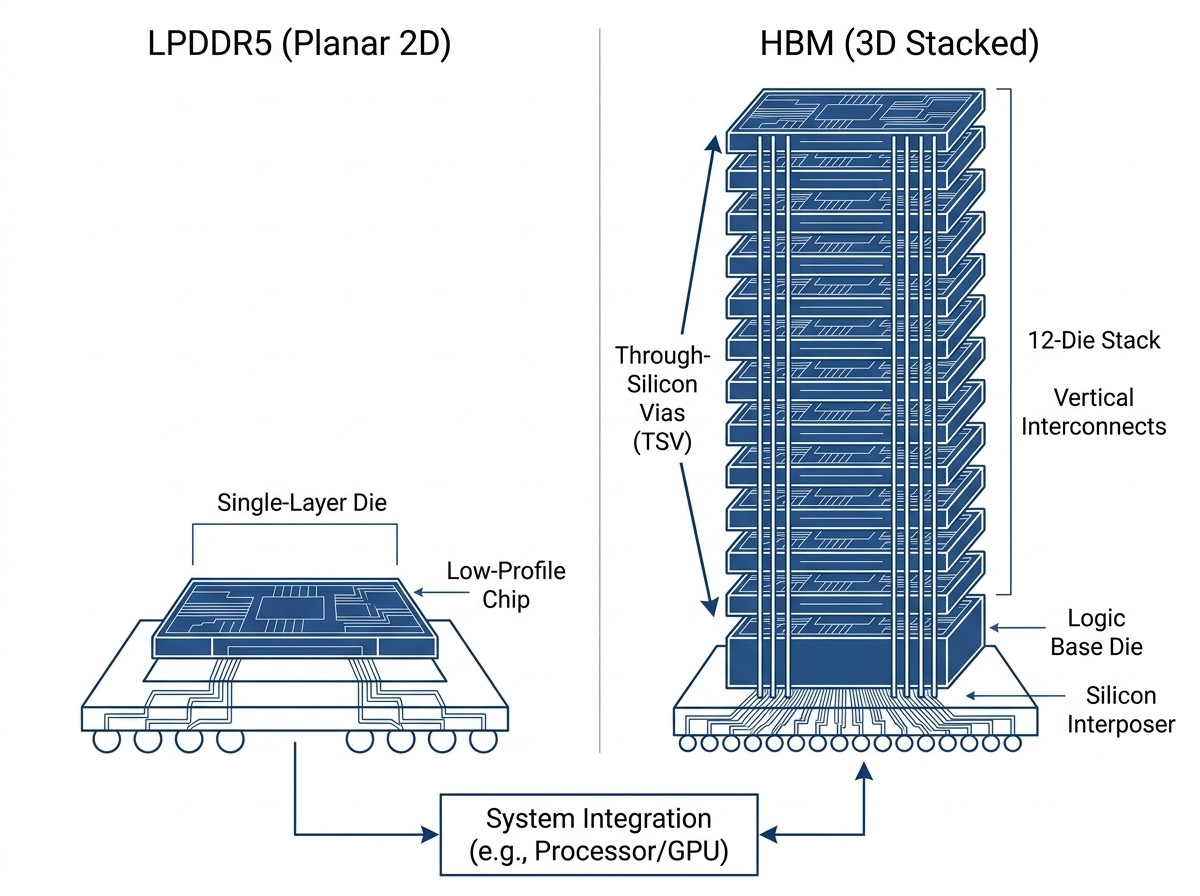
Memory manufacturers face a straightforward economic calculation: the same wafer that produces 1GB of HBM generates $15–20 in revenue from AI customers, versus $4–5 for standard memory serving consumer and industrial markets[3]. When AI demand is effectively unlimited, the decision to shift capacity toward HBM is not malice—it is rational profit maximization within a constrained supply base.
The Known Good Die (KGD) Yield Trap
Stacking memory introduces a compounding defect problem. When a manufacturer assembles 12 LPDDR or DRAM dies to create an HBM cube, a defect in even a single die renders the entire cube unusable. This "Known Good Die" (KGD) requirement means that the effective yield for HBM production is significantly lower than for standard planar memory.
The practical consequence is that overall global memory volume is being destroyed at the manufacturing stage. Even as Samsung, SK Hynix, and Micron invest billions in new fabs, a meaningful portion of their output fails to become usable product due to the stacking yield loss. This hidden inefficiency exacerbates the shortage for every memory standard not prioritized for AI workloads.
For engineers evaluating memory architecture alternatives for new designs, understanding these yield dynamics can inform component selection. Our guide on choosing between SRAM and DRAM for your system discusses the trade-offs in reliability and density that become critical during supply-constrained periods.
CXL and the Enterprise Hoarding of Standard Memory
A less visible but equally significant drain on LPDDR5 supply comes from the data center's adoption of Compute Express Link (CXL). This technology allows servers to pool standard commodity memory—including DDR5 and even LPDDR5—as expansion memory tiers for AI inference workloads. Rather than relying solely on HBM for every task, hyperscalers are buying up standard memory modules to create large-capacity memory pools.
To better understand the differences between server modules and standard configurations, you can read our comparison on what is a DIMM and how it differs from DDR memory.
The result is that enterprise buyers are directly outbidding consumer and edge OEMs for the same standard memory parts. If you are sourcing LPDDR5 for an edge AI camera or an automotive ADAS module, you are competing against Microsoft and Google for components that were originally designed for consumer-grade products.
Industry Impact: Automotive, Edge AI, and the Redesign Trap
The Automotive LPDDR5 Supply Constraint
Automakers face a uniquely difficult position in the 2026 supply environment. According to industry cost models, the LPDDR5 shortage is adding $90 to $220+ in BOM cost increases per vehicle, depending on the memory configuration required for advanced driver assistance, infotainment, and telematics systems.
Unlike consumer electronics manufacturers who can absorb some cost increases or delay product launches, automotive OEMs face regulatory deadlines and safety certification schedules that cannot simply be pushed back. A vehicle platform designed in 2023 with specific memory requirements must ship in 2026, regardless of spot market conditions.
The Memory Shortage of 2026, Explained
The Danger of Forced PCB Redesigns
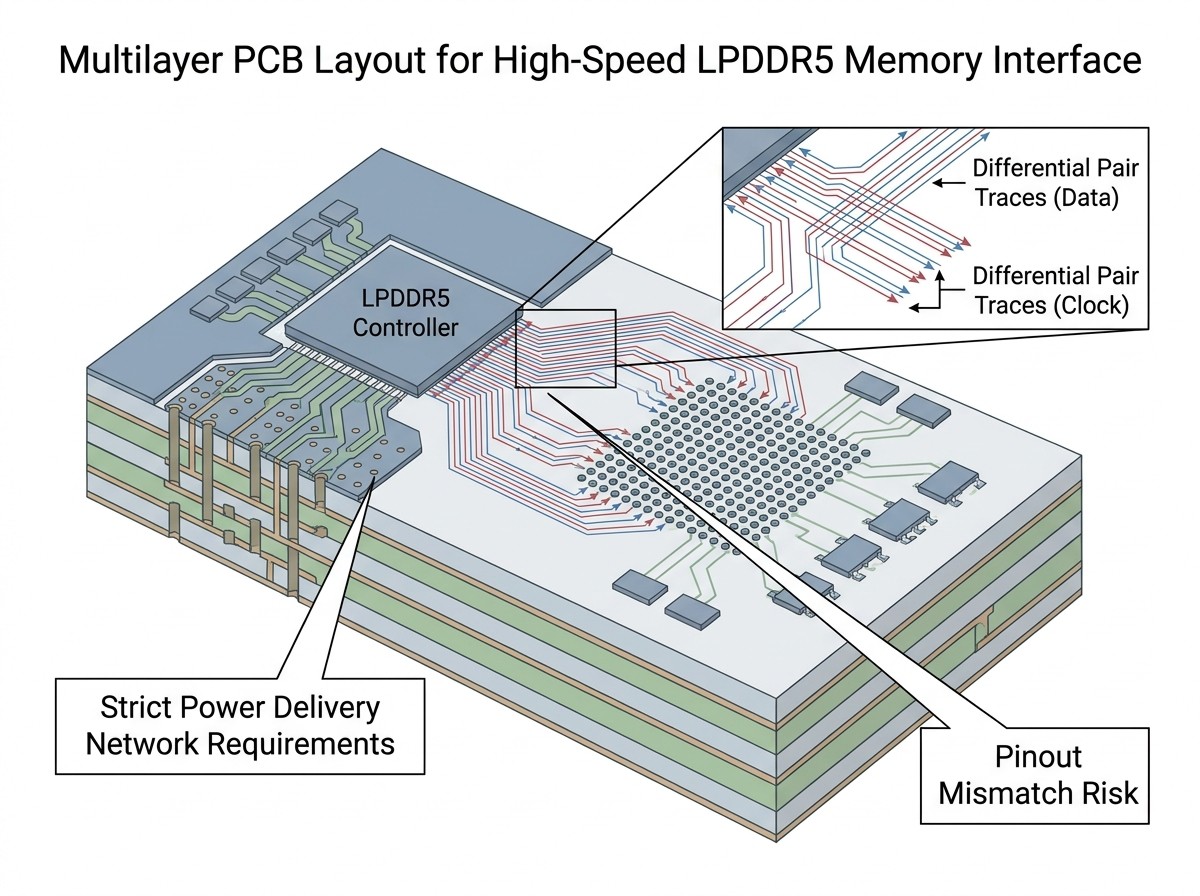
The most dangerous risk for engineering teams is the temptation to solve the LPDDR5 shortage by migrating to a different memory generation. Replacing LPDDR5 with LPDDR4 is not a drop-in swap; it requires a full PCB redesign and, for automotive applications, an ISO 26262 safety recertification that takes 12 to 24 months.
Similarly, jumping from LPDDR4 to LPDDR5 mid-cycle requires new memory controllers, different pinouts, and updated power delivery networks. For teams already struggling with allocation, the engineering effort and timeline required for a memory generation migration often makes it less viable than paying premium spot market prices.
Our detailed guide on DDR5 as the new generation of memory standard outlines the pinout and controller differences that engineers must account for when evaluating cross-generation migration.
Flash Memory Shortage 2026: The Secondary Crisis
Samsung's MLC End-of-Life (EOL) Impact
While DRAM dominates headlines, the NAND flash market faces its own structural crisis. Samsung is shutting down its last 2D NAND facility (Hwaseong Line 12) and has issued End-of-Life notices for MLC NAND with final shipments scheduled for June 2026[6][7]. This action is driving global MLC capacity down by approximately 42%, according to ChosunBiz and TrendForce data[7][8].
For industrial buyers who have relied on MLC NAND for its reliability characteristics in storage and embedded applications, this EOL represents a forced migration timeline. Unlike the gradual phase-outs of previous years, the 2026 MLC shutdown is abrupt and absolute.
The Forced Migration to SLC NAND
With MLC supply disappearing, industrial procurement teams must migrate to SLC NAND, the only remaining single-level-cell alternative that offers comparable reliability for embedded applications. The demand shock from this migration is driving forecasted SLC contract price increases of 120–170% in the second half of 2026[8][9].
The knock-on effect is also raising prices for NOR flash as buyers seek alternatives. Companies that did not secure long-term supply agreements for SLC NAND before Q2 2026 are now facing cost increases that can exceed 200% compared to their previous MLC budgets[9].
Procurement Strategies to Mitigate Line-Down Risks
Extending POs and Rolling Safety Stocks
The first structural change procurement teams must make is extending their purchasing horizon. In a 40–58 week lead time environment, 30-day rolling forecasts provide no meaningful protection. Industry best practices for 2026 recommend 3-to-6-month rolling safety stocks for critical LPDDR5 and NAND parts, with purchase orders extended to 90–120 days.
This requires finance teams to approve significantly higher inventory carrying costs. However, the cost of a line-down event—lost production revenue, delayed customer shipments, and potential contract penalties—far exceeds the carrying cost of buffer inventory during a shortage.
Navigating the Spot Market and Cross-Referencing
When franchised distributor allocations prove insufficient, the spot market becomes the only viable channel for maintaining production schedules. However, spot buying carries risks: counterfeit components, non-qualified parts, and pricing that fluctuates wildly from week to week.
The key to navigating this environment is having real-time visibility into pricing by specific part numbers, along with access to verified cross-references that allow substitutions without engineering redesigns. Independent distributors who maintain vetted inventory and track price movements can provide the flexibility that franchised channels currently lack.
For teams seeking to secure allocation and avoid the engineering challenge of board redesigns, platforms like UTMEL offer real-time LPDDR5 and NAND flash price tracking by specific part numbers, along with verified alternates and cross-references that can keep production lines running without triggering new PCB layouts.
Memory Component Sourcing Decision Matrix
| Strategy | Lead Time | Cost Premium | Engineering Effort | Risk Level |
|---|---|---|---|---|
| Wait for Contract Allocation | 40–58 weeks | Contract price | None | High (line-down risk) |
| Spot Market Sourcing | 2–6 weeks | 50–200% above contract | Low (same part number) | Medium (counterfeit risk) |
| PCB Redesign/Migration | 12–24 months | Variable | Very high | Very high (schedule risk) |
For most production-critical applications, the optimal path is a hybrid approach: maintain contract orders with franchised distributors for baseline volume while using vetted independent distributors to cover short-term gaps with verified parts.
Summary
The 2026 memory chips shortage is a fundamental shift in silicon economics, not a temporary supply disruption. With HBM consuming wafer capacity at a 3-to-1 penalty ratio and NAND facing abrupt MLC EOL transitions, standard procurement playbooks will fail. Engineers and buyers who adapt through extended safety stocks, strategic spot market navigation, and verified cross-referencing will maintain production schedules while competitors face line-down crises.
Keep your production on schedule by searching your specific LPDDR5 or NAND flash part numbers on UTMEL to track real-time pricing, find verified cross-references, and request a fast RFQ from vetted inventory.
FAQ
When are LPDDR5 lead times expected to stabilize?
Industry consensus suggests no meaningful relief before mid-2028. New fab capacity from Samsung's Pyeongtaek complex and Micron's Boise expansion will take 3–5 years to reach volume production. Lead times of 40–58 weeks will persist through 2027.
Are there viable drop-in replacements for specific LPDDR5 part numbers?
Some LPDDR5X parts can replace standard LPDDR5 variants, but not all pinouts and controller configurations are compatible. Always verify with the memory controller manufacturer before assuming drop-in compatibility.
How do I avoid counterfeit memory chips when buying on the spot market?
Source from independent distributors who provide traceability documentation and offer component testing services. Avoid suppliers who cannot provide original manufacturer date codes and lot numbers.
What is the difference in availability between LPDDR5 and LPDDR5X?
LPDDR5X is experiencing tighter supply than standard LPDDR5 because it is the preferred memory for flagship smartphones and premium laptops, putting it in direct competition with AI infrastructure demand.
How does the MLC NAND EOL affect industrial storage procurement?
Industrial buyers have until June 2026 to place final MLC NAND orders. After that date, migration to SLC NAND is the primary path, but expect 120–170% price increases for SLC components in 2H26. Lock in long-term agreements now.
References
The Elec. (2026, June 23). "Consumer LPDDR5X Prices Surge 89% in Q2 Amid Ongoing Supply Imbalance." (Based on Sigmaintell market data).
Wccftech. (2026, June 23). "Apple Is In For A Sticker Shock In Q3, With LPDDR5X DRAM Costs Surging By $68.8 In A Single Quarter."
TrendForce / Commercial Times. (2025, December 26). "AI Reportedly to Consume 20% of Global DRAM Wafer Capacity in 2026, HBM and GDDR7 Lead Demand."
Tom's Hardware. (2025, December 19). "Here's why HBM is coming for your PC's RAM — HBM consumes around three times the wafer capacity of DDR5 per gigabyte."
Wikipedia & Memory Manufacturers. (2026). "High Bandwidth Memory (HBM) wafer conversion ratios." (Micron & SK Hynix statements on 3-to-1 wafer penalty ratios).
The Elec / TrendForce. (2026, February 26). "Samsung Reportedly Ends Last 2D NAND Line as Early as March, Repurposes Facility for 1C DRAM."
ChosunBiz. (2026, May 12). "Samsung and Kioxia quit 2D NAND as AI shift triggers Korea memflation." (Detailing Hwaseong Line 12 shutdown and June EOL timeline).
TweakTown / TrendForce. (2026, May 13). "MLC NAND prices have tripled as Samsung shuts its last 2D NAND line and Kioxia plans a full exit by 2029."
Wccftech / Economic Daily News. (2026, April 28). "Samsung Exiting MLC NAND Business Opens Up Space For Taiwanese NAND Maker Resulting In A 382% Revenue Increase."
 UTMEL
UTMEL
We are the professional distributor of electronic components, providing a large variety of products to save you a lot of time, effort, and cost with our efficient self-customized service. careful order preparation fast delivery service
 High-Capacity HDDs in the AI Era: Sourcing Massive Storage for Cold DataUTMEL04 July 2026621
As generative AI and LLMs drive an explosion of unstructured data, high-capacity enterprise HDDs remain the most cost-effective solution for cold storage. Despite rising prices and supply chain bottlenecks, mechanical drives offer a massive cost-per-gigabyte advantage over SSDs. Technologies like HAMR and SMR enable capacities beyond 24TB, though deploying these drives requires robust RAID 6 strategies and secured IC supply chains to mitigate rebuilding and procurement risks.
Read More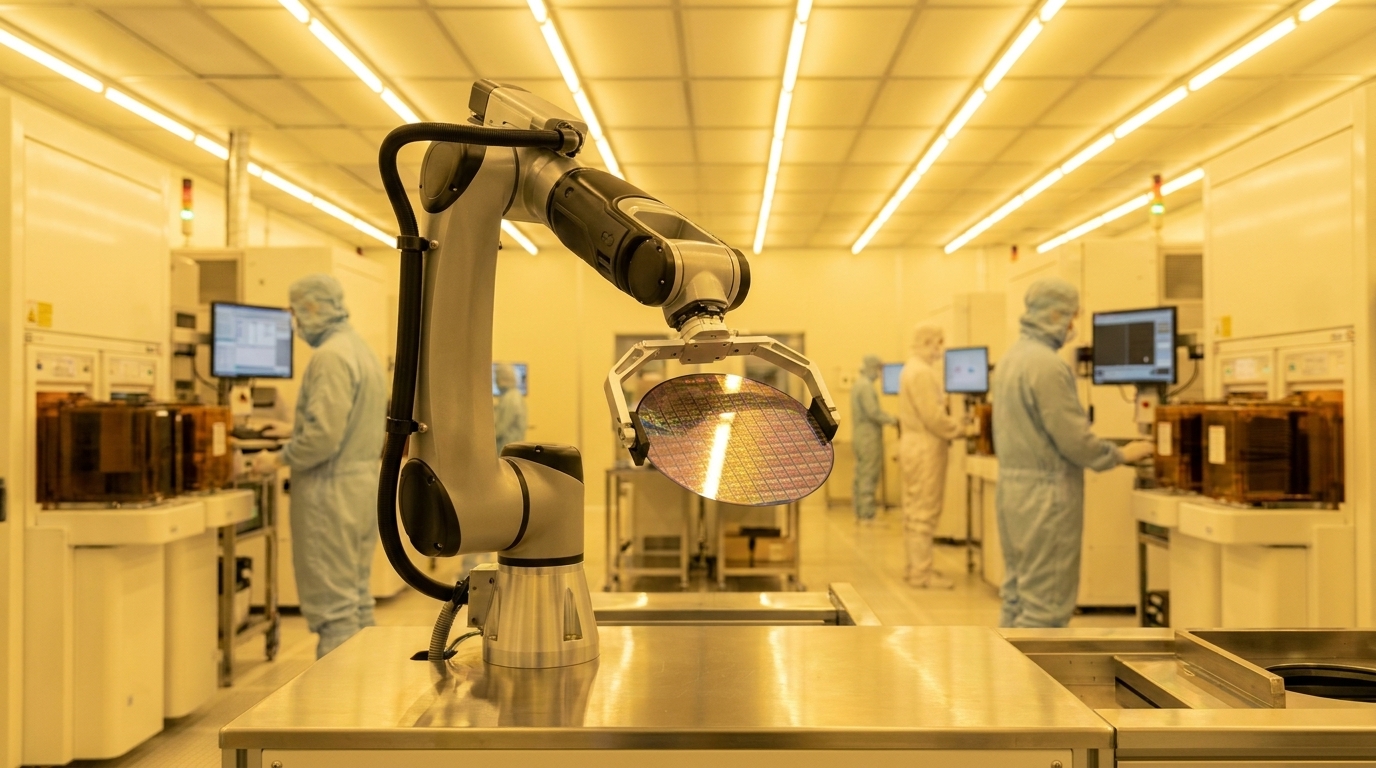 LPDDR5 Memory 2026: Lead Times, HBM Impact, and Procurement StrategiesUTMEL17 July 20263817
Global semiconductor fabrication facility managing advanced memory production. In Q2 2026, contract prices for 12GB LPDDR5X modules surged 89% quarter-over-quarter, jumping from $77.10 to $145.90, while lead times for advanced memory components stretched to 40–58 weeks. A vehicle platform designed in 2023 with specific memory requirements must ship in 2026, regardless of spot market conditions.
Read More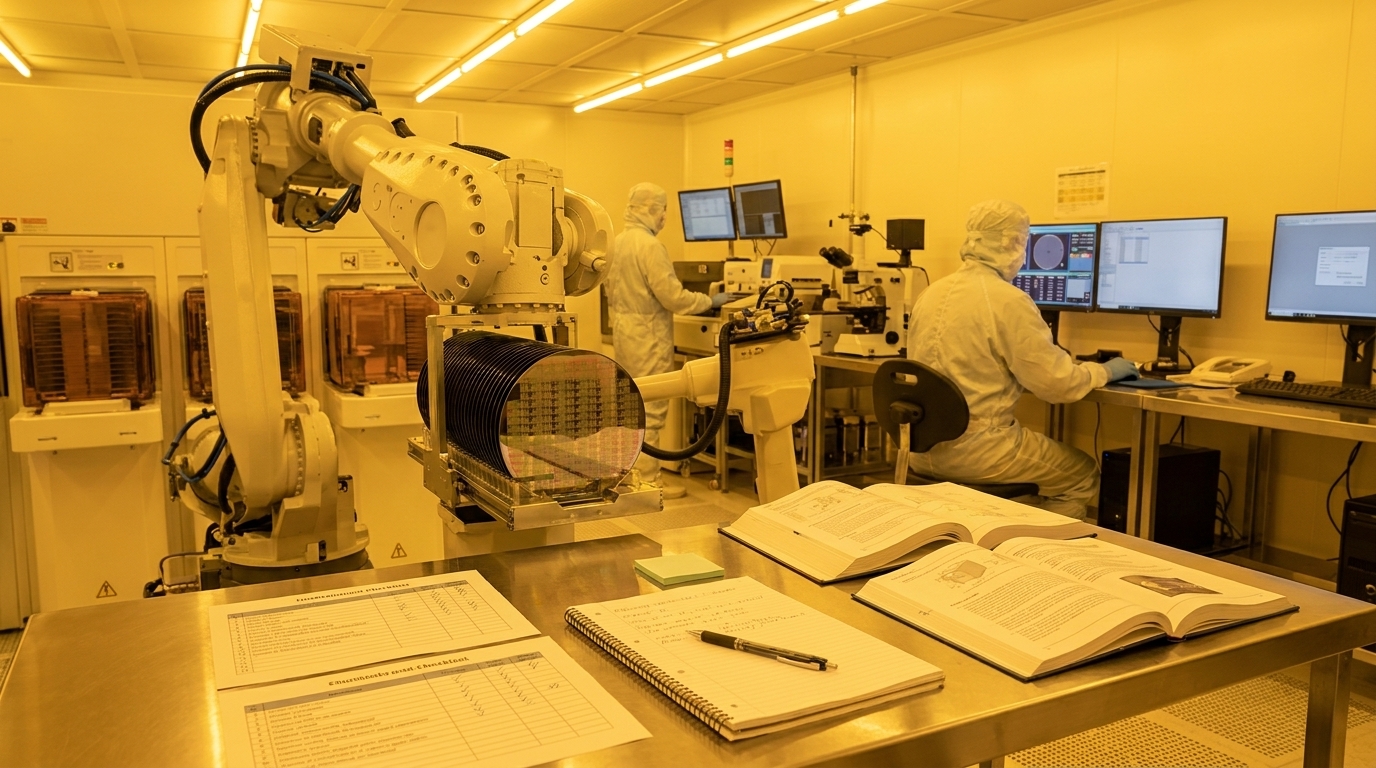 2026 DRAM and the 3-to-1 HBM Rule: Market Supply Analysis and B2B Procurement GuideUTMEL23 July 20265102
This technical report explains how the physical "3-to-1 wafer penalty" of High Bandwidth Memory (HBM) production has cannibalized standard DRAM capacity, causing severe shortages of DDR4 and DDR5 in 2026. As major hardware OEMs pass these soaring component costs directly to enterprise buyers, procurement teams must abandon Just-in-Time models in favor of rolling safety stocks and strategic long-term distributor agreements to protect budgets.
Read More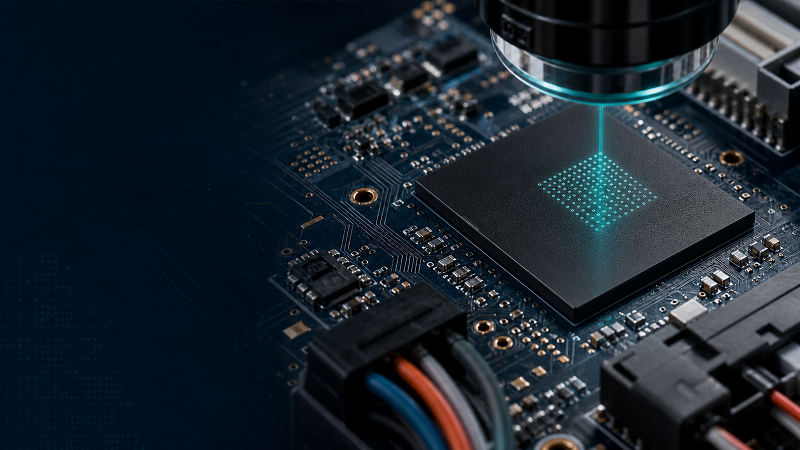 Automotive vs. Industrial Memory: How to Verify Grade Codes Before Sourcing In this guideUTMEL06 August 2026376
Memory ordering codes can look almost identical while representing different temperature limits, packages, revisions, qualification evidence, or lifecycle commitments. For automotive and long-life industrial designs, the safe purchasing unit is the complete manufacturer ordering code, not a base part number plus a familiar-looking suffix.
Read More How to Use an External Hard Drive?UTMEL24 June 20219403
The external hard drive is a compact and portable hard drive storage which can be plugged in or unplugged at any time. It mainly uses USB or IEEE1394 interfaces. It can transmit data with the system at a higher speed. The IEEE 1394 interface transfer rate is 50-100 MB/s.
Read More
Subscribe to Utmel !